Record the nameplate configuration
For an initial review, provide kVA, primary and secondary voltage, phase, frequency, impedance, serial number, fluid type, and whether the unit has a single- or multi-bushing arrangement. These details help distinguish equipment built for different overhead systems; primary voltage, grounding, and secondary configuration must suit the intended application.
Pole units commonly serve residential, rural, commercial, and small industrial distribution. A model that appears similar may not be interchangeable. Send a clear nameplate photo and any available drawings or test records. Testing is not required just to request an offer.
Describe condition and recovery value
If known, note the condition of tank seams, bushings, arresters, mounting brackets, welds, and fluid level, along with corrosion, leaks, burn marks, cracked porcelain, or signs of lightning or thermal damage. Only qualified personnel should access or inspect equipment on a pole; do not approach or handle a unit that has not been made safe.
A small transformer may have limited whole-unit resale value, while copper, aluminum, core steel, bushings, and uncontaminated fluid can affect material recovery. Fluid or PCB records, if available, are useful context, not a prerequisite to contact. Share existing documentation and disclose known damage or missing components.
Plan removal before scheduling
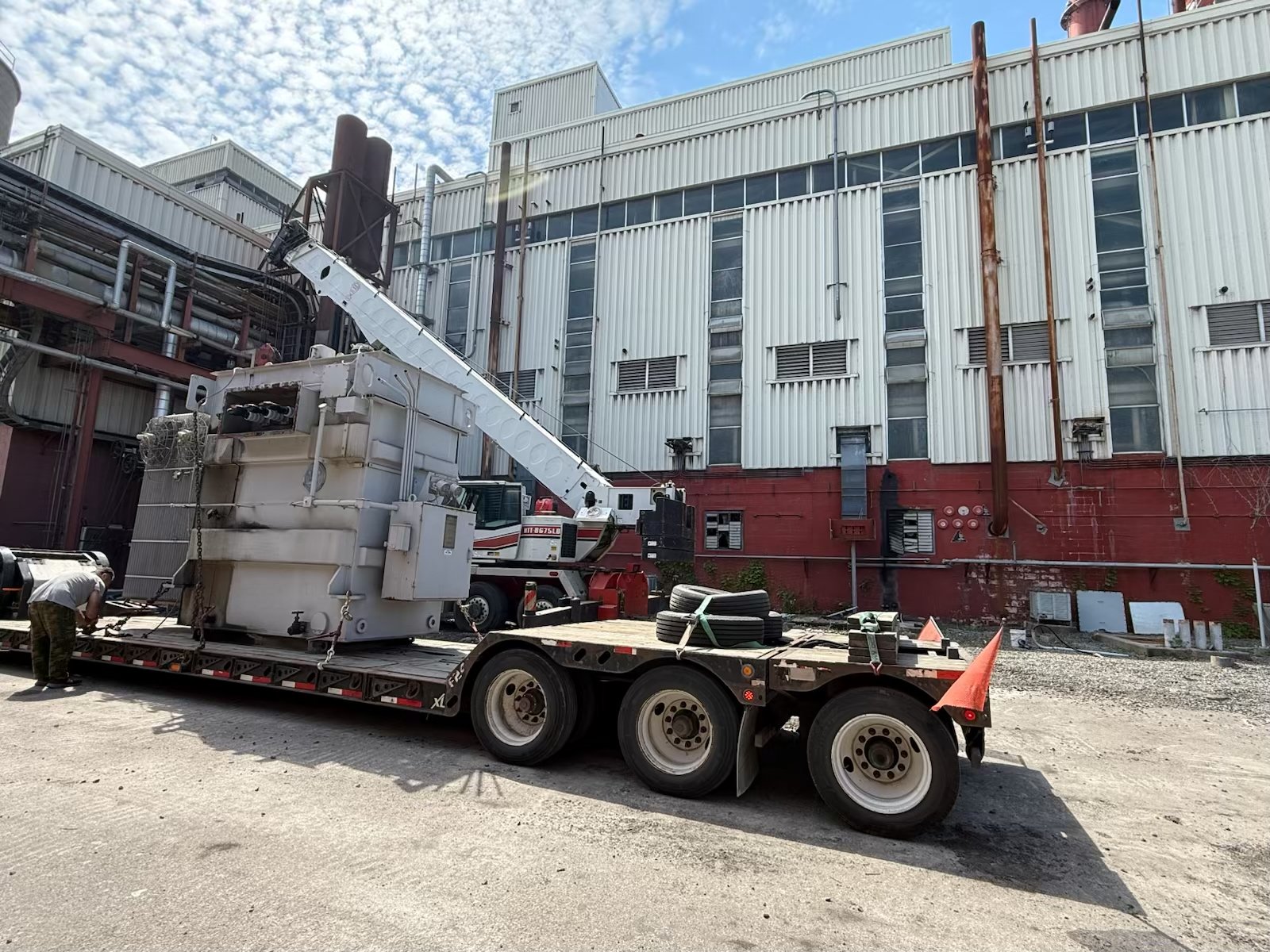
Tell us whether the transformer remains mounted and whether qualified crews have deenergized and isolated the circuit. Removal may require pole or bucket access, traffic control, spill prevention, and a safe way to lower and secure the unit. Electrical isolation and disconnection must be performed by qualified personnel.
Provide approximate dimensions and weight, site access constraints, and the safest available loading method. Freight is covered by the buyer, with the precise removal and loading scope agreed in advance. Payments are upfront; confirm the scope and logistics before work is scheduled.
What should I send if the transformer is still on the pole?
Send the nameplate details or photo, known condition and component status, and approximate dimensions and weight. State whether qualified crews have deenergized and isolated it. Do not arrange access or removal by untrained workers; the removal plan and responsibilities must be agreed before scheduling.