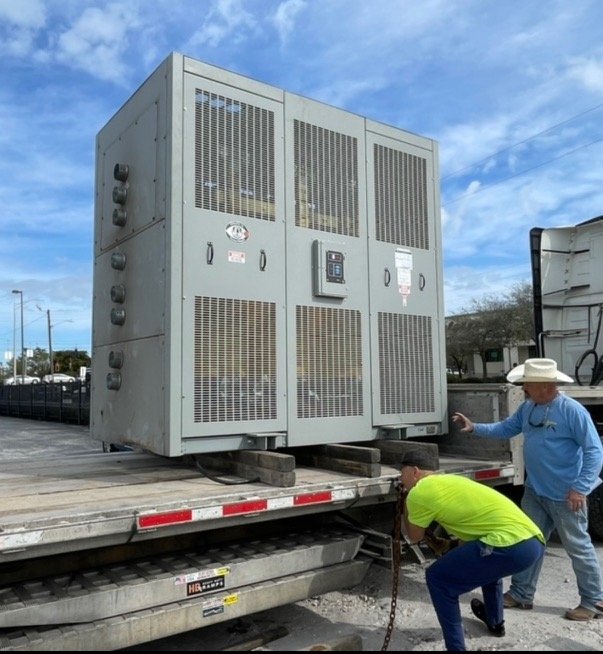
Identify saleable equipment
Inventory transformers, UPS systems, batteries, medium-voltage switchgear, transfer switches, PDUs, busway, cooling-related electrical equipment, and cabling by asset.
Provide nameplates, photos, dimensions, weights, and one-line diagrams. Note whether equipment remains intact, has been drained, or is packaged or dismantled.
Plan for condition and access
Share available lockout/tagout and de-energization records, battery chemistry, and oil or refrigerant information; apparent inactivity does not verify safe handling.
Mobile’s Gulf Coast setting makes weather exposure, corrosion, staging, and heavy-haul access useful planning details. Confirm rigging clearances, floor loading, egress, and loading conditions.
Agree scope before shipment
No test is required simply to request an offer. Existing inspection, service, fluid, or battery records can be provided if available and help describe each asset.
Payments are upfront and the buyer covers freight. Purchase and removal responsibilities are mutually agreed; seller-qualified personnel handle electrical isolation and disconnection, coordinating with the owner and site authorities.
Should batteries and transformers be planned as one handling item?
Not automatically. Battery chemistry, residual fluids, damage, and equipment condition create separate handling questions. Confirm each item’s status and the agreed scope before arranging loading.