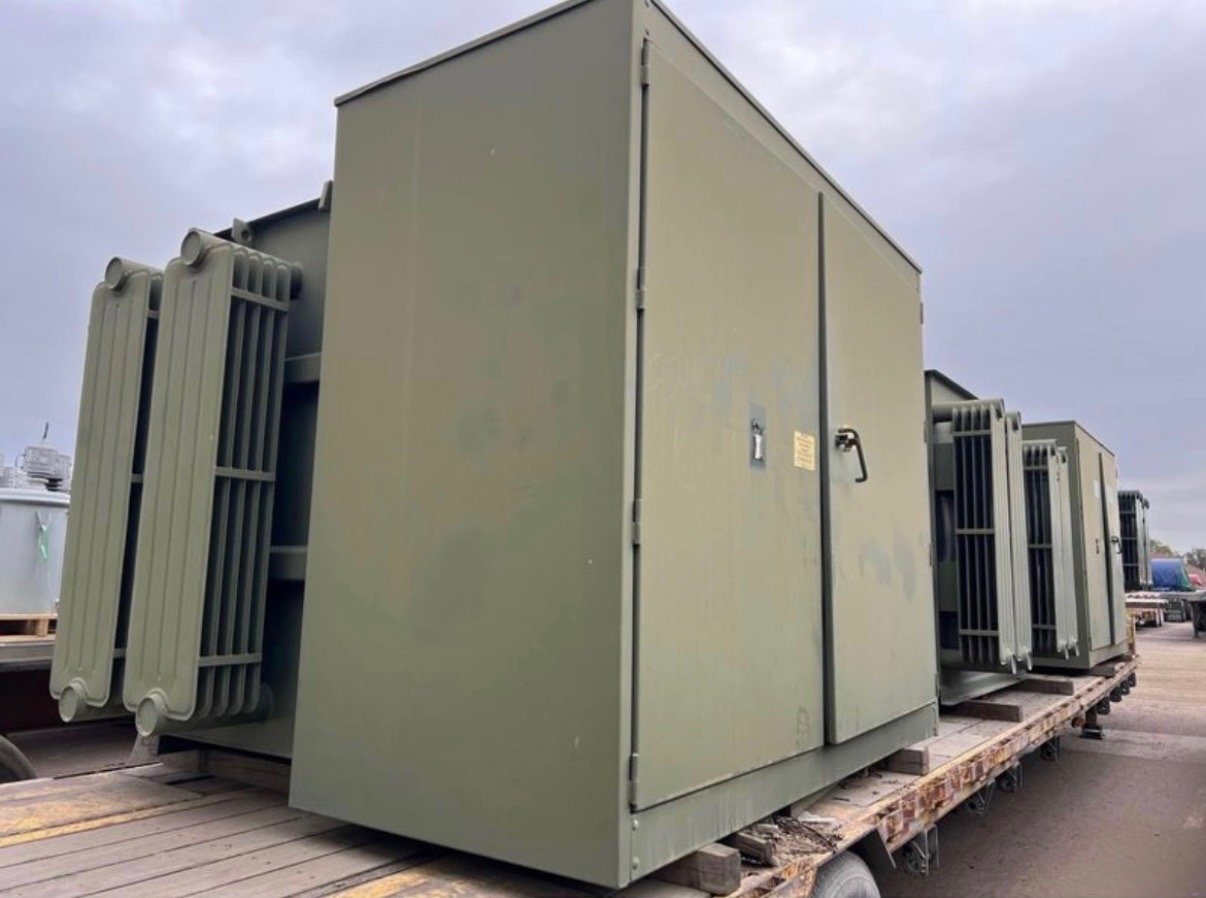
Nameplate and application
Send MVA, primary and secondary voltages, impedance, frequency, winding connection, tap range, cooling class, temperature rise, serial number, and total weight.
These details support interchangeability and freight review, but system voltage, short-circuit duty, grounding, and protection settings determine suitability for a particular application.
Condition and components
For oil-filled units, describe bushing condition, oil level, leaks, conservator or nitrogen system, radiators, tap changer, and included fans, pumps, gauges, and controls.
Winding metal, core steel, tank condition, completeness, and available oil or dissolved-gas records affect valuation. No test is required to request an offer; share existing oil, PCB, or other records if available.
Site and freight planning
Provide dimensions, weight, center-of-gravity and lifting-point information, plus loading access and route limitations. Dense commercial or institutional sites may require protected loading zones and scheduled staging.
Payment is made upfront, and the buyer covers freight. Purchase and removal scope is mutually agreed; your qualified personnel handle electrical isolation and disconnection, with loading coordinated in advance.
What details help plan transformer removal?
Share dimensions, weight, center of gravity, engineered lifting points, loading access, route limits, and requested timing, along with ratings, condition, records, and ownership details.