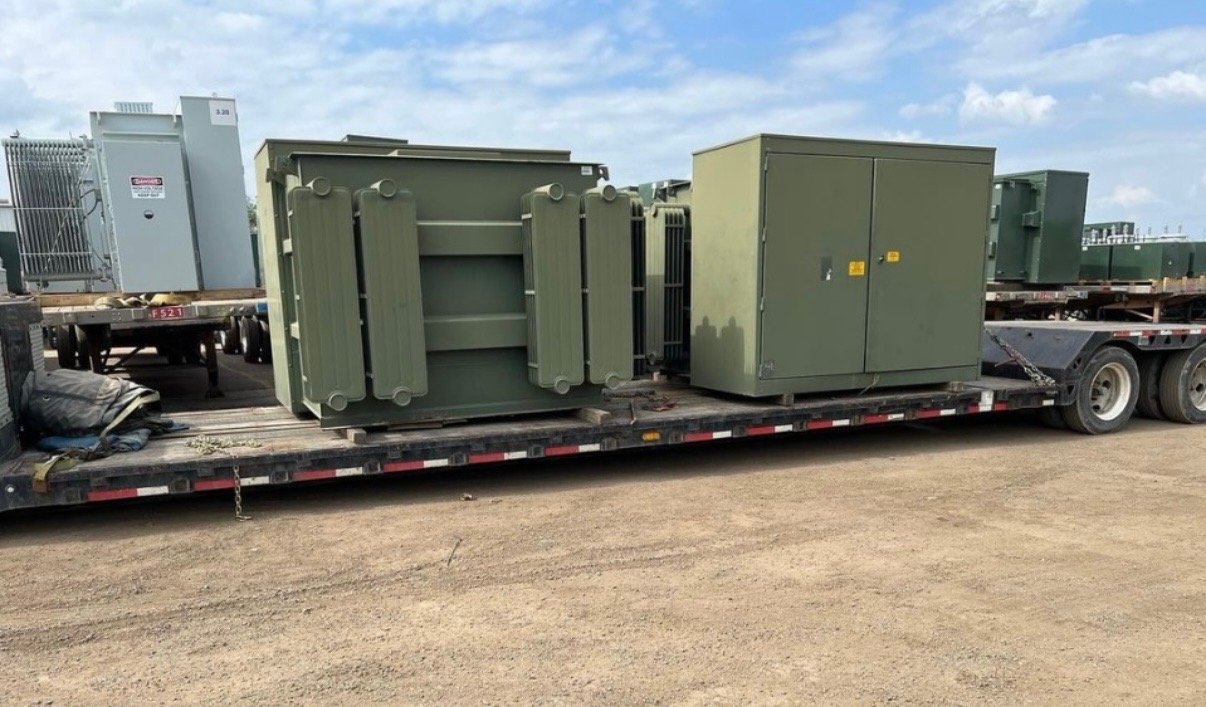
Start with the nameplate
Provide kVA, primary and secondary voltage, phase, frequency, impedance, serial number, connection, fluid type, and stated winding material. Identify the high-voltage compartment design.
Dead-front and live-front units serve different system arrangements and are not automatically interchangeable. Ratings and configuration help establish potential value and suitable handling.
Describe the enclosure
Report visible condition of doors, hinges, locks, base, bushings, elbows, fuses, drain provisions, and signs of corrosion, water entry, leaks, or overheating.
Fluid condition, copper content, intact accessories, enclosure integrity, and serviceability affect valuation. No test is required to request an offer; provide existing fluid, PCB, or other records if available.
Coordinate site access
Note the pad location, cable slack, nearby traffic, truck access, and lifting constraints. Do not open energized equipment; describe only what can be observed safely.
Seller-qualified personnel handle electrical isolation and disconnection. Removal scope is mutually agreed, payment is upfront, and the buyer covers freight within the agreed scope.
Does the transformer need to be tested before requesting an offer?
No. Share the nameplate, visible condition, fluid details, and any existing sample or PCB records. A truck-access description and confirmation of who coordinates switching and disconnection are also useful.