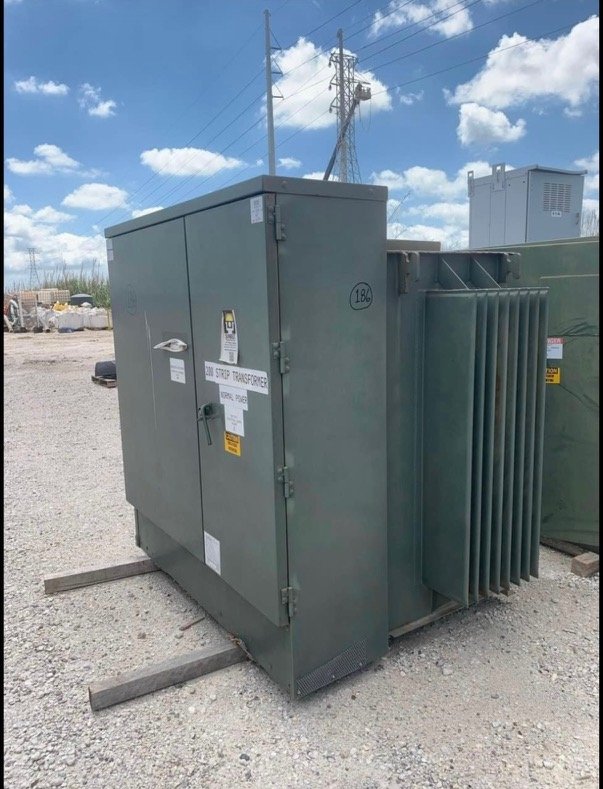
Capture specifications
Photograph the nameplate and record kVA, primary and secondary voltage, phase, impedance, serial number, and manufacturer. Include dimensions, weight, and accessory photographs if known.
Describe the transformer’s installation and condition, including visible corrosion, leaks, damaged bushings, missing components, or operating concerns. Identify whether it is liquid-filled or dry-type.
Provide available documentation
Valuation depends on specifications, condition, ownership, available records, and the removal scope agreed by both parties. No test is needed simply to request an offer.
Provide existing oil, PCB, inspection, or maintenance records if available, and note known oil-handling or accessory needs. Documentation helps characterize the unit but does not guarantee an offer.
Check the lift and route
Large apparatus may require confirmation of crane reach, pick points, overhead obstructions, ground access, staging space, and transport route constraints before removal is planned.
Payment is upfront, and the buyer covers freight. Purchase and removal responsibilities are mutually agreed; the seller’s qualified personnel handle electrical isolation and disconnection.
Which logistics details are especially useful for a large Decatur transformer?
Provide approximate weight and dimensions, crane reach and pick-point information, overhead and ground-access constraints, staging space, and route restrictions.