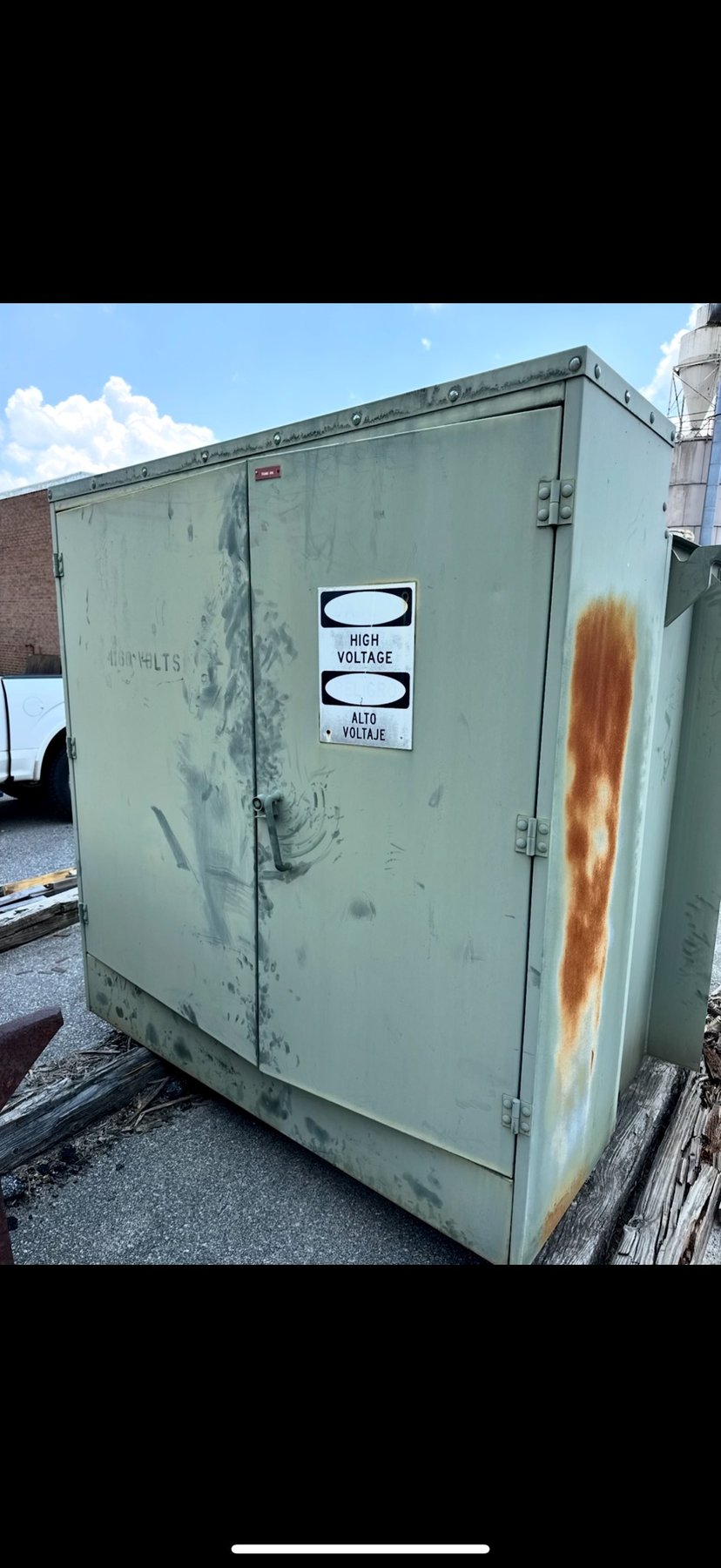
Start with the nameplate and fluid records
Send clear nameplate photos and record kVA or MVA, primary and secondary voltage, phase, frequency, impedance, cooling class, tap range, and bushing ratings. Include the serial number, dimensions, and total fluid and shipping weights if known. These details help assess whether the unit may suit a utility, industrial, commercial, or process application.
Identify the fluid and its quantity, and share existing oil-sample or PCB documentation when available. Copper content, core condition, intact controls, and oil history can affect resale or salvage decisions. Missing records do not prevent an inquiry; note what is unknown rather than estimating.
Describe condition and removal access
Report known leaks, damaged tank welds or gaskets, valve or radiator problems, cracked bushings, abnormal gauge readings, pressure damage, and any low-level alarm. Mention whether the transformer was operating when removed and what prompted its removal. Existing inspection or maintenance records can clarify condition without requiring new testing to request an offer.
In Monroeville, transport planning may need to account for weather exposure and access at paper or wood-products sites, institutions, or commercial properties. Share site access, loading constraints, and whether the unit can remain upright and be secured in transit. Qualified personnel must isolate and disconnect electrical equipment; agree with the buyer precisely who handles removal and loading. Buyer-covered freight and payment upfront are subject to the mutually agreed transaction scope.
Plan fluid handling with qualified parties
Oil sampling, draining, decontamination, and transport require qualified parties following applicable environmental and hazardous-material rules. Do not drain or prepare the transformer yourself. State whether fluid remains in the tank and describe any known containment or handling requirements when requesting an offer.
Before arranging pickup, confirm the unit’s ownership, its location, and the agreed responsibilities for disconnection, lifting, loading, and freight. Provide current photos of the tank, bushings, radiators, and access route so the removal plan reflects the actual equipment and site.
Do I need an oil test or PCB report before requesting an offer?
No. Testing is not required to contact us. Share any existing oil or PCB records, identify gaps, and disclose known condition issues; the offer and removal terms depend on the unit and mutually agreed scope.