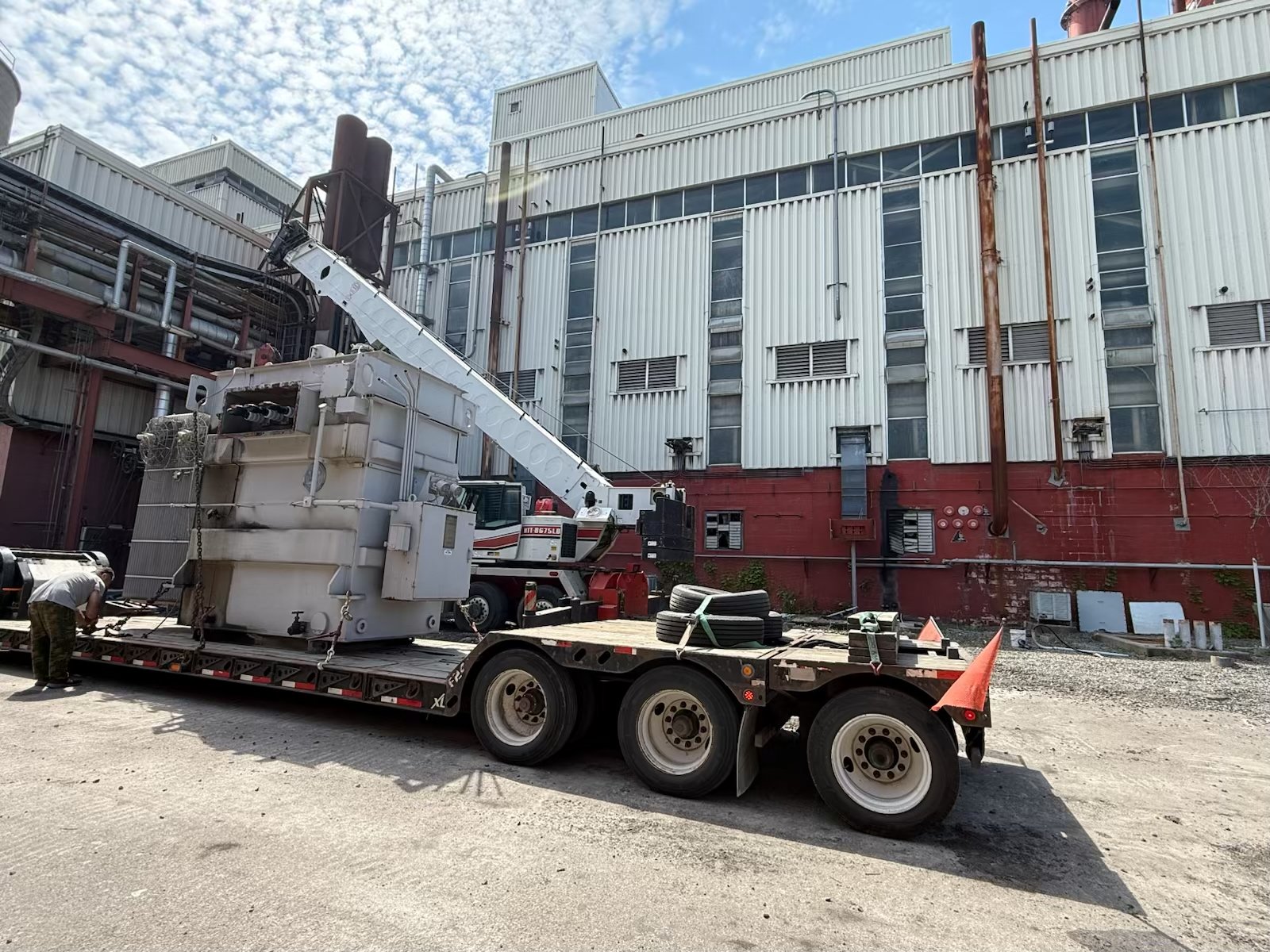
Identify the configuration
Provide kVA, primary and secondary voltage, phase, frequency, impedance, serial number, fluid type, and winding material when stated on the nameplate.
Tell us whether the unit is dead-front or live-front and list included elbows, fuses, links, and compartment hardware. Existing fluid or PCB records may be shared; testing is not required to request an offer.
Describe enclosure condition
Report leaks, corrosion, water entry, overheating, vandalism, bulged panels, and the condition of doors, hinges, locks, base, bushings, and drain provisions.
Voltage class, kVA, copper content, fluid condition, enclosure integrity, and accessory completeness inform value, including whether serviceable resale or material recovery is more realistic.
Make removal workable
In Mobile, pad location, cable slack, traffic exposure, and lifting-vehicle access can change loading effort. Share site access details and preferred timing.
The seller’s qualified personnel handle switching, isolation, and disconnection. Scope is agreed together; payment is upfront and buyer-paid freight is included.
Considering pad mount transformer recycling in Mobile?
A purchase offer may depend on whether a unit has reuse potential or is assessed for material recovery. Describe the cabinet, fluid information, available records and access to the pad; do not assume disposal or electrical disconnection is included without an agreed scope.
Should I open the cabinet to photograph the interior?
Do not open energized equipment. Share exterior photos and available records; your qualified personnel must handle isolation and disconnection before any authorized access.