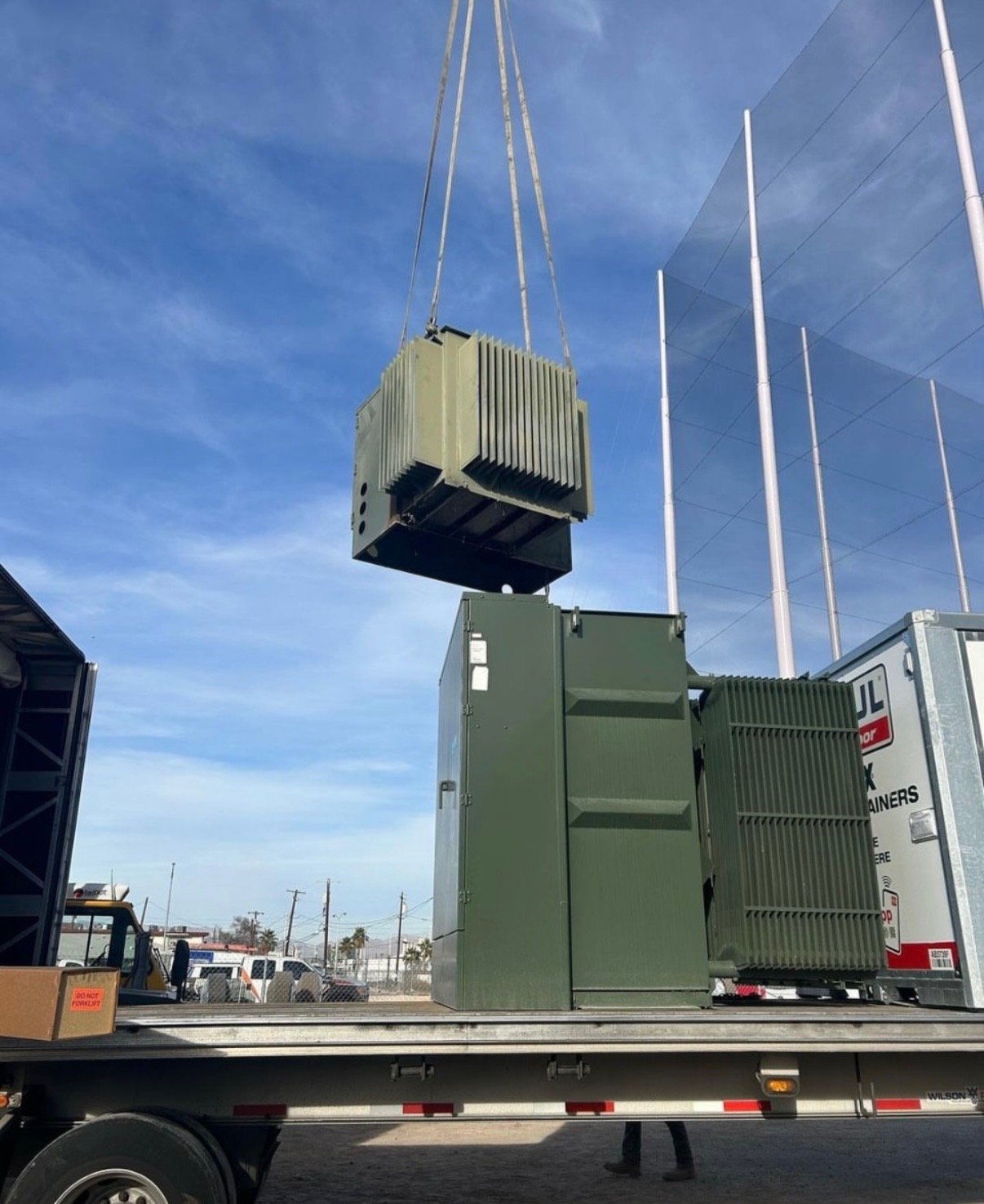
Document the transformer
Provide nameplate MVA, primary and secondary voltages, impedance, frequency, winding connection, tap range, cooling class, temperature rise, serial number, and weight.
Include dimensions, center-of-gravity or lifting-point details if available, plus oil, dissolved-gas, PCB, and service records. No testing is required simply to request an offer.
Assess completeness and condition
Bushing condition, oil level, leaks, conservator or nitrogen system, radiators, tap changer, control cabinet, and accessory completeness can change valuation significantly.
Copper or aluminum windings, core steel, tank condition, and flood, fire, impact, or fault history also inform an offer; identify missing or stripped components clearly.
Coordinate access and freight
Enterprise site access and controlled entry may affect scheduling. Large units can require dimensional review, engineered lifting points, route planning, and controlled loading rather than pallet freight.
Payments are upfront and buyer covers freight. Removal scope is agreed together; seller-qualified personnel perform electrical isolation and disconnection, while loading arrangements are confirmed before pickup.
Which records help with an offer on a substation transformer?
Nameplate and weight details, accessory inventory, service history, and any existing oil, dissolved-gas, or PCB records are helpful. No test is required to request an offer; value depends on condition, ownership, safety, records, and scope.