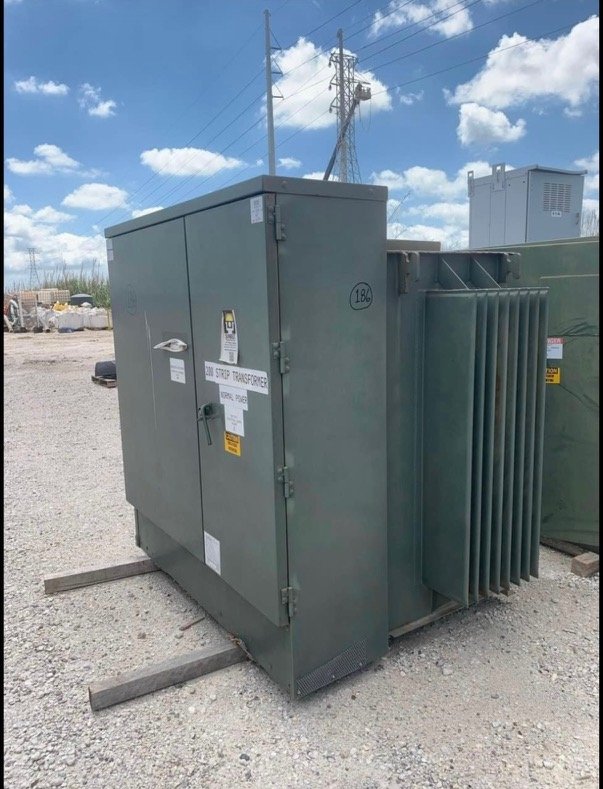
Identify the configuration
Provide kVA, primary and secondary voltage, phase, frequency, impedance, connection, fluid type, serial number, and winding material if stated on the nameplate.
Tell us whether the unit is dead-front or live-front, and list included elbows, fuses, links, and compartment hardware. Designs are not interchangeable without system review.
Describe condition
Report enclosure, doors, hinges, locks, base, bushings, drain provisions, corrosion, leaks, overheating, vandalism, or water entry. Do not open energized equipment.
Existing fluid, oil, PCB, or other records may be provided if available; no test is required to request an offer. Value can reflect fluid condition, copper, accessories, and enclosure integrity.
Plan access safely
Note the concrete pad, cable slack, traffic exposure, and lifting-vehicle access. These details affect loading and removal coordination in Clanton’s commercial and light-industrial settings.
The seller’s qualified personnel handle electrical isolation and cable disconnection. Purchase and removal scope is mutually agreed; payment is upfront, and the buyer covers freight.
Who disconnects the transformer from the system?
The seller’s qualified personnel handle electrical isolation and disconnection. Share site-access details and any switching coordination requirements; offers depend on ownership, condition, safety, records, and agreed scope.