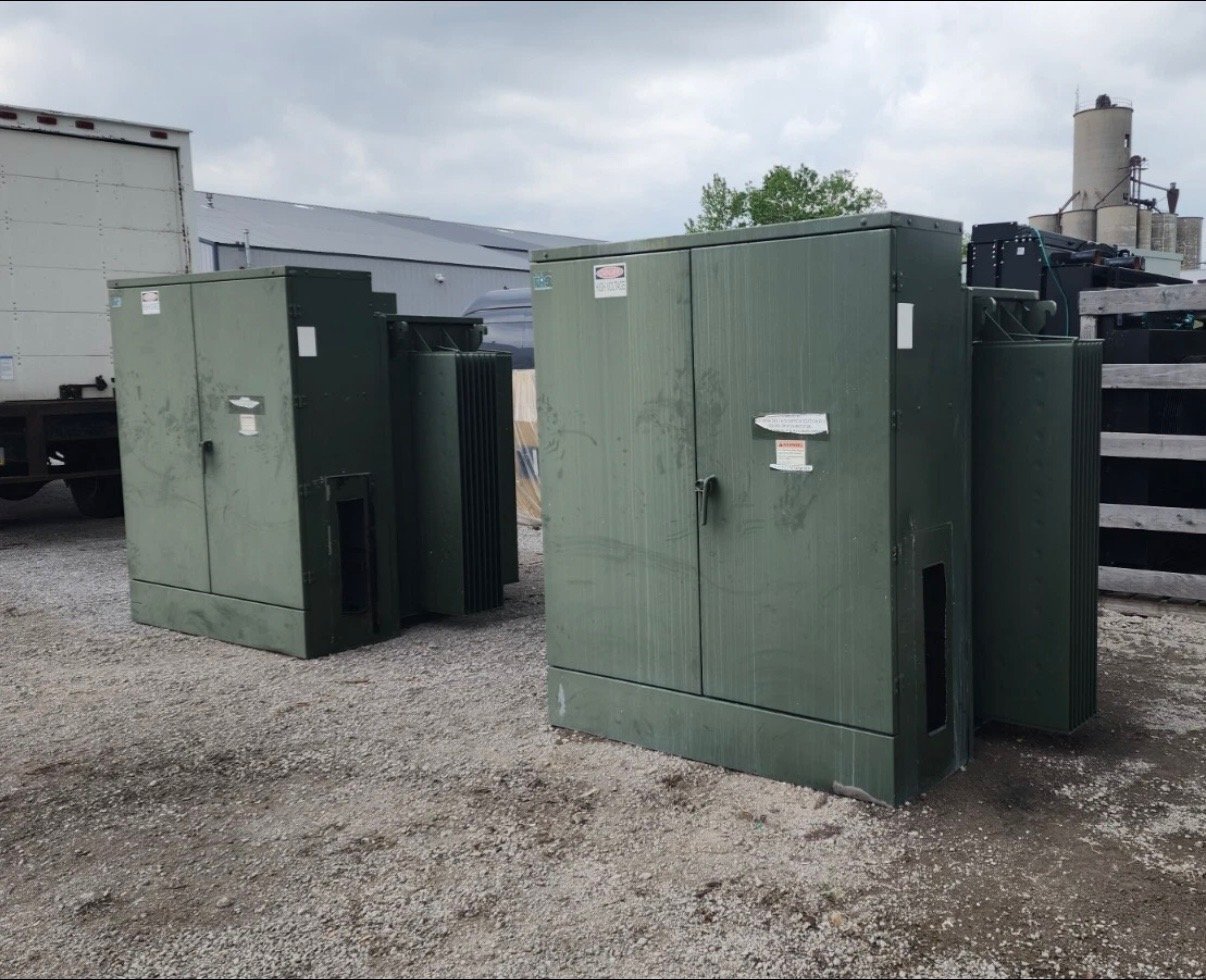
Identify the unit
Share a clear nameplate photo showing kVA, primary and secondary voltage, phase, frequency, impedance, connection, and winding material when stated. Include serial number and fluid type.
Note whether the high-voltage compartment is dead-front or live-front, and list included elbows, fuses, links, and compartment hardware. These designs require system-specific review.
Condition and value
Describe enclosure condition, doors, hinges, locks, base, bushings, and visible corrosion, water entry, leaks, or overheating. Do not open energized equipment for inspection.
Value depends on voltage class, kVA, copper content, fluid condition, intact accessories, and enclosure integrity, as well as whether the unit is serviceable or material recovery equipment.
Records and removal
No test is required simply to request an offer. Existing oil, PCB, sample, or other equipment records may be provided if available; they help clarify evaluation.
Share pad, cable-slack, traffic, and lifting-vehicle access details. Payment is upfront and the buyer covers freight; removal scope is mutually agreed, with your qualified personnel handling isolation and disconnection.
What information helps assess a pad-mounted transformer?
Send the nameplate, compartment type, accessory list, fluid and available records, condition notes, and site-access details. No test is required to request an offer.